Detailed Insights with MIP probing

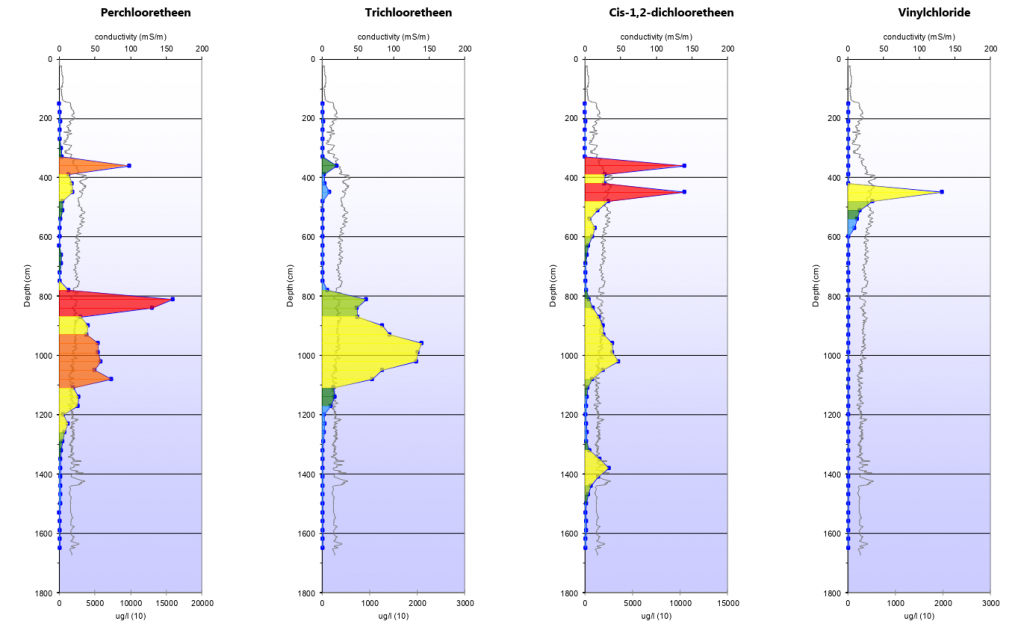
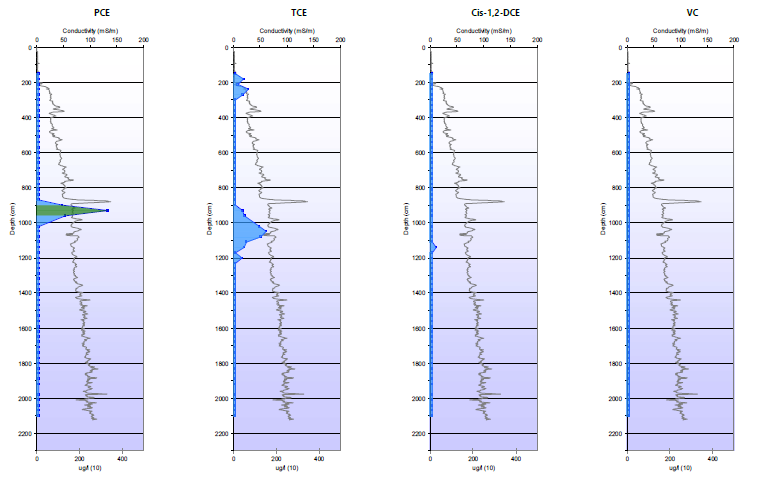
EnISSA’s unique detection system combines MIP with the analytical power of GC-MS. The result? Highly detailed information on both soil contamination and soil stratigraphy.

How does it work?

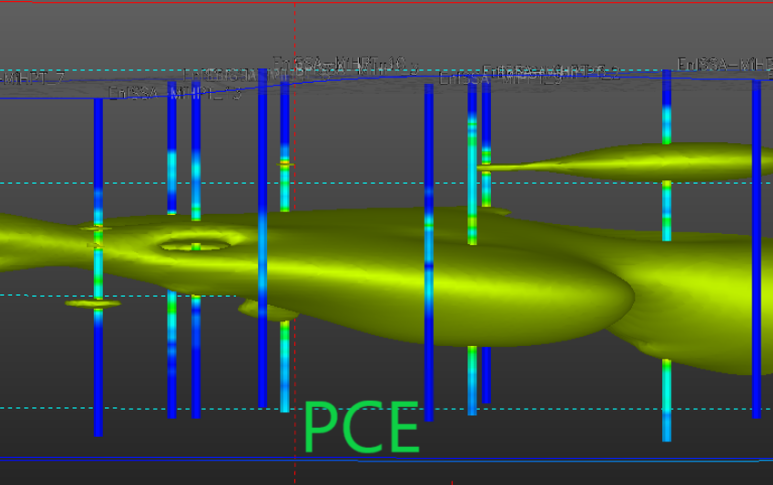
Using an innovative sampling method, we connect the MIP probe directly to the GC-MS detector. This clever combination allows a GC-MS analysis to be performed every 30 cm, enabling the identification of individual Volatile Organic Compounds (VOCs). With such a high density of data points, we gain clear insights into the presence and distribution of contamination.

  • Flexible, project-specific detectors: We can deploy customized, component-specific detectors tailored to each project, based on our unique combination of GC-MS and optimized data processing, ensuring the most relevant and precise data collection for your site’s unique needs.
 
  • We create specific profiles for each individual compound. After calibration with standard solutions, the results are compared with groundwater concentrations. This supports further investigation to delineate the entire groundwater contamination plume.
 
  • By performing measurements across the full depth of the probing, we significantly reduce the risk of missing contamination. This is often a limitation when investigating with monitoring wells, where sampling can miss contamination at certain depths.
 
  • By measuring a range of individual compounds, we gain a unique understanding of (bio)degradation process of chlorinated solvents. 
 
  • Additional parameters, such as MBTE, MEK, n-butyl acetate, hexane, acetone, and 1,4-dioxane, can also be detected and mapped. The result? Even more valuable data to support the design of a successful remediation plan.
  

Want to know more about PFAS in focus?

Projects

How does PFAS migrate through a complex subsurface? Using high-resolution EC-HPT soundings, our team in Gavere identified permeability contrasts and key stratigraphic transitions in detail. This knowledge underpins targeted sampling, improved monitoring and a realistic assessment of PFAS mobility.
Redeveloping former dry cleaning sites requires certainty about what lies beneath the surface. Using high-resolution site characterisation (HRSC), we map historical chlorinated solvent contamination accurately, even in hard-to-access urban locations. This creates a solid basis for well-informed remediation and viable redevelopment.
On an active production site, we conducted a high-resolution subsurface investigation to precisely identify source zones and contaminant behaviour. By applying HRSC techniques, chemical and geological data were integrated into one coherent model. The results directly supported targeted optimisation of the existing Pump & Treat system.