Mapping subsoil & groundwater

Looking for information on soil properties? EnISSA high-resolution measurements provide valuable insights into variations and characteristics of the subsurface.

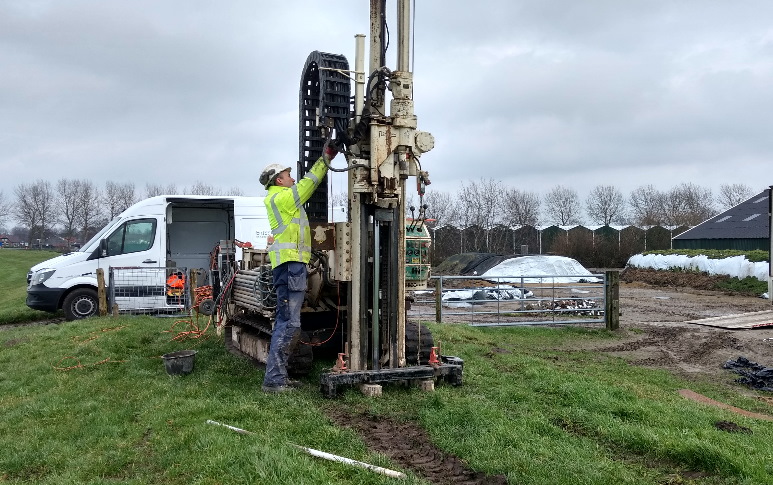
We conduct this type of investigation in combination with MIP or OIP measurements for environmental investigations, as well as specifically for groundwater or geotechnical studies. A probe is inserted into the ground to create a depth profile using one or more of the sensors listed below.

Electric Conductivity measurements (EC)

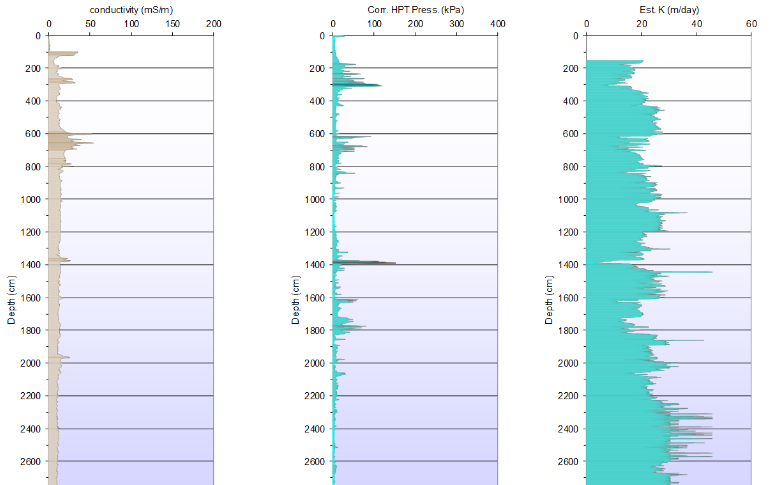
Soil conductivity is measured using a probe equipped with an integrated EC dipole. These measurements provide insights into variations in soil composition, with an EC profile illustrating the different soil layers.

Hydraulic Profiling Tool (HPT)

The Hydraulic Profiling Tool (HPT) collects data on soil permeability. Using a probe and a flow-controlled pump, a constant water flow is injected into the soil. The applied injection pressure is recorded and plotted against depth. Increased injection pressure indicates less permeable soil layers, while a pressure drop reflects more permeable layers. An empirical model is then used to calculate the estimated hydraulic conductivity (K [m/day]).

Cone Penetrometer Test (CPT)

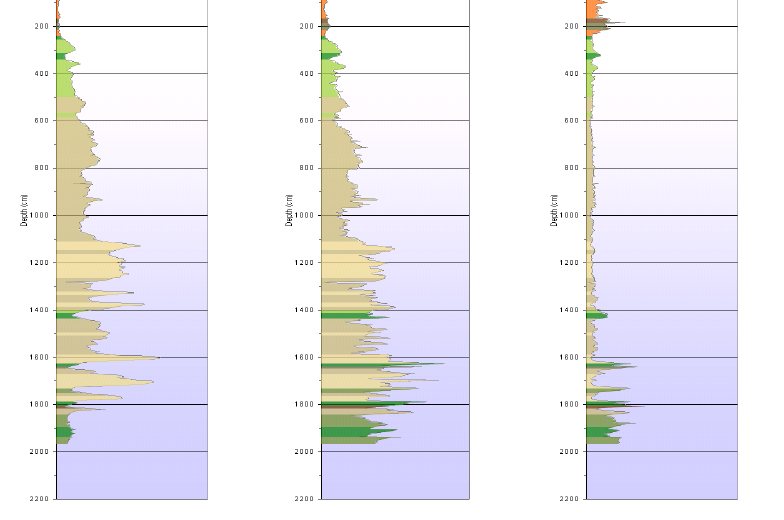
For the Cone Penetrometer Test (CPT), a CPT cone is driven into the ground at a constant speed using a heavy-duty penetrometer or a compact Geoprobe, anchored into the soil. This test records two key parameters: cone resistance and sleeve friction. The resulting data provides an accurate overview of the soil layers, classified into 12 categories.

Want to know more about these technologies?

Projects

How does PFAS migrate through a complex subsurface? Using high-resolution EC-HPT soundings, our team in Gavere identified permeability contrasts and key stratigraphic transitions in detail. This knowledge underpins targeted sampling, improved monitoring and a realistic assessment of PFAS mobility.
Redeveloping former dry cleaning sites requires certainty about what lies beneath the surface. Using high-resolution site characterisation (HRSC), we map historical chlorinated solvent contamination accurately, even in hard-to-access urban locations. This creates a solid basis for well-informed remediation and viable redevelopment.
On an active production site, we conducted a high-resolution subsurface investigation to precisely identify source zones and contaminant behaviour. By applying HRSC techniques, chemical and geological data were integrated into one coherent model. The results directly supported targeted optimisation of the existing Pump & Treat system.