Assessing VOC's in soil gas, indoor or ambient air

Soil contamination involving Volatile Organic Compounds (VOC’s) can pose health risks
to users, residents, neighbors, and passersby. Leveraging our expertise in
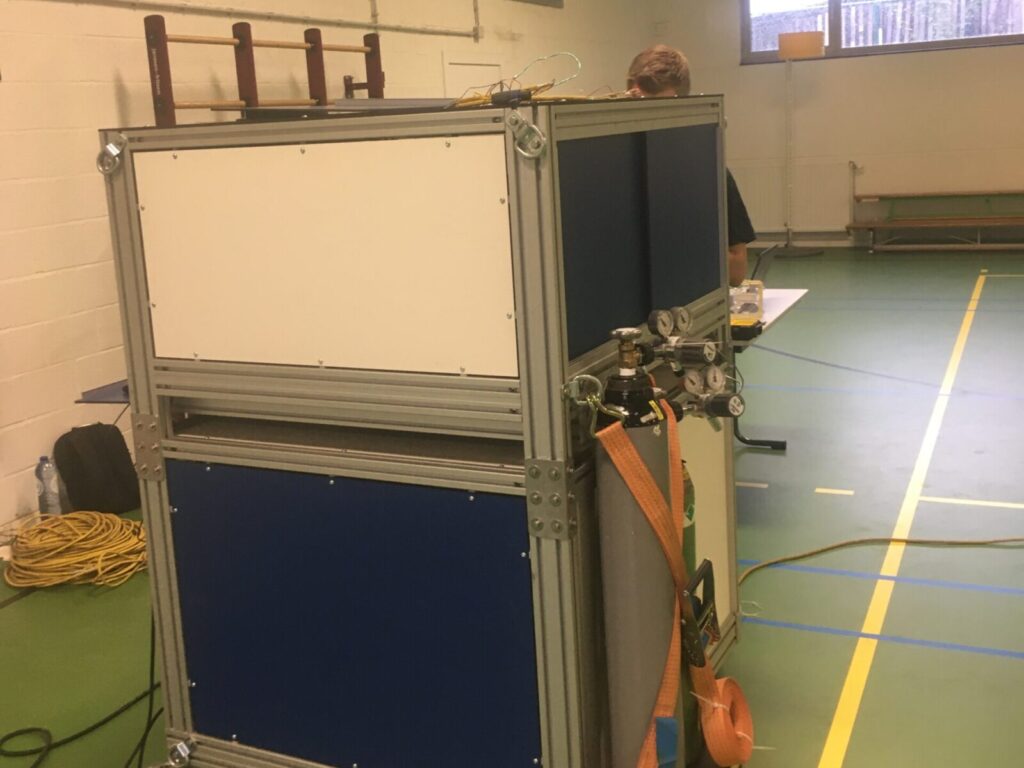
rapid GC-MS measurements using MIP technology, we have developed a tailored
methodology for on-site gas analysis. This allows us to analyze soil gas,
indoor air, ambient air, and industrial gas streams directly in the field,
enabling remediation teams to take swift and targeted action when necessary.

Rapid on-site VOC evaluation and measurement

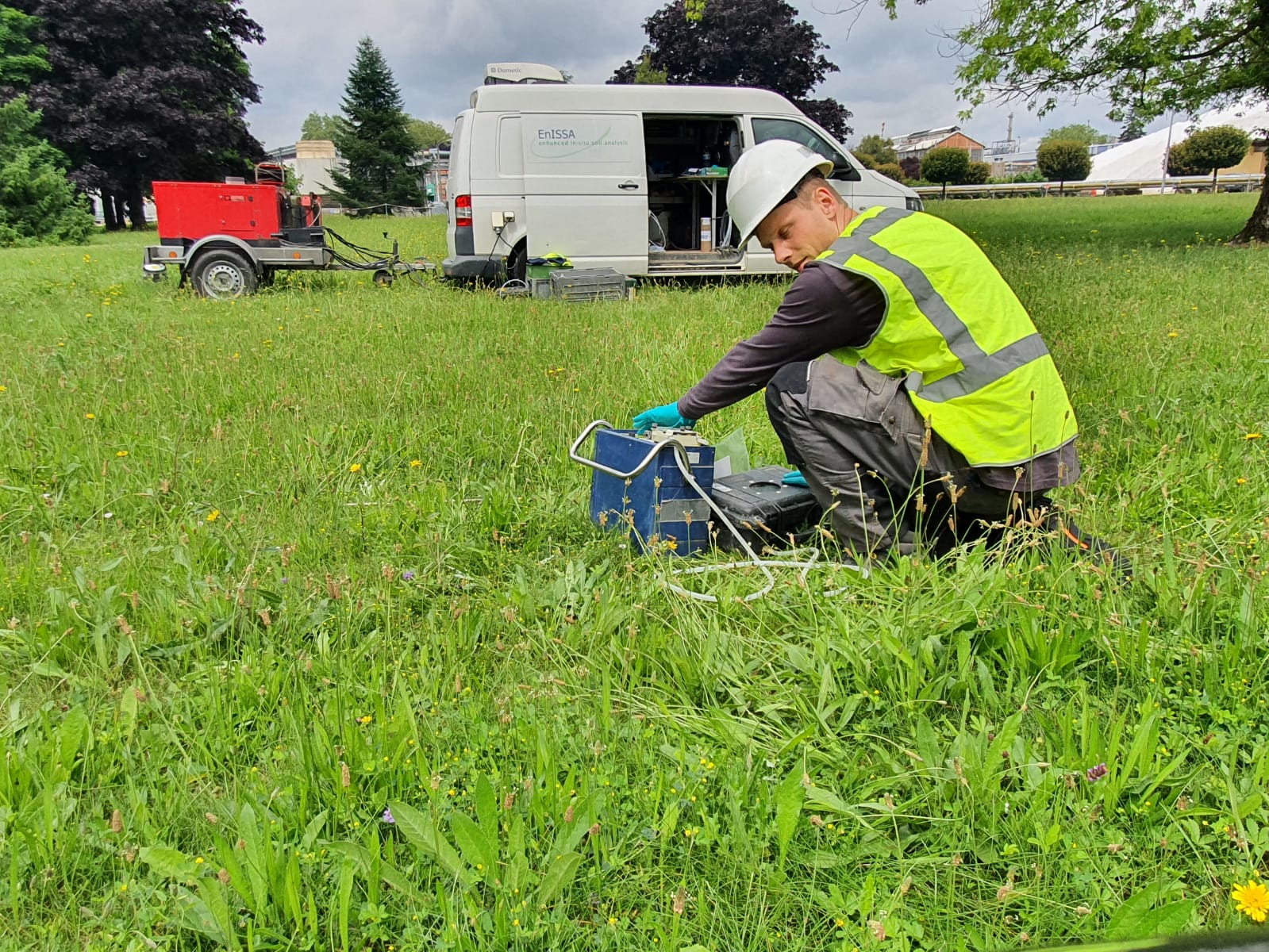
Using Vapor Pins™ or soil gas probes, we sample soil gas. By capturing the gas in tedlar bags or directly connecting it to the GC-MS, we can instantly measure individual VOCs in unsaturated zones. This approach quickly identifies the source zone of soil contamination, facilitating the planning of further targeted investigations. For example, we use this as a preliminary phase before conducting more detailed studies with MIP-GC-MS.

Additionally, on-site GC-MS analysis is highly effective for monitoring VOCs in indoor or ambient air. The ability to analyze individual components allows us to address the highly variable thresholds for air pollution and implement specific mitigation measures.

Thanks to the comprehensive sampling system, the GC-MS can even monitor multiple gas lines sequentially from various sampling points.

Real-time evaluation of individual VOCs

Through dynamic sampling and real-time monitoring of measured values, all results from our on-site GC-MS analysis are immediately available.

This intensive sampling provides a detailed understanding of concentrations, allowing for precise adjustments to soil investigations or remediation activities as and when needed.

Want to know more about the On-site GC-MS Analysis?

Projects

How does PFAS migrate through a complex subsurface? Using high-resolution EC-HPT soundings, our team in Gavere identified permeability contrasts and key stratigraphic transitions in detail. This knowledge underpins targeted sampling, improved monitoring and a realistic assessment of PFAS mobility.
Redeveloping former dry cleaning sites requires certainty about what lies beneath the surface. Using high-resolution site characterisation (HRSC), we map historical chlorinated solvent contamination accurately, even in hard-to-access urban locations. This creates a solid basis for well-informed remediation and viable redevelopment.
On an active production site, we conducted a high-resolution subsurface investigation to precisely identify source zones and contaminant behaviour. By applying HRSC techniques, chemical and geological data were integrated into one coherent model. The results directly supported targeted optimisation of the existing Pump & Treat system.